Learning from an Anthropologist
Antizionism theorized by Adam Louis-Klein

What happens when an academic is pointed toward an intellect whose output is insightful and productive? Cite them. Quote them. Tell others to read their work
I do not know Adam Louis-Klein, whose website states he is an Anthropology graduate student at McGill University with ethnographic experience among Indigenous people in the Amazon, specifically the Desana people of the Vaupés region in Colombia. At the end of October 2025, Louis-Klein – frankly after reading his work, I feel like calling him Adam – has developed a superb, dynamic line of argument countering hatred.
For a full view of the developing argument and activism, see https://www.movementagainstantizionism.org/ and its Facebook and Instagram pages. Here is my platforming of the Movement against Antizionism, MAAZ, for beginners.
Digression: beyond the work by students from my courses at New College of Florida who went on in Anthropology, I have not been taken by the intellectual force of any recent anthropologist in a long time. Louis-Klein breaks that pattern. As a professor of Anthropology at a small liberal arts college, I spend much effort distilling the insights from the discipline.
In my training on the history of the discipline, there was a disruption in Anthropology: early anthropologists, whose focus was the study of man, were colonial and racist. These were not epithets, they went to places where European powers and American hegemony allowed them free access to people in towns, villages, and nomadic encampments and occasionally in cities (for the most part, anthropologists focused on nonurban people otherwise known as the savage slot in the social sciences). I read their publications to critique their approaches. I have followed the trajectory launched by Franz Boas: anthropology was a means to celebrate human diversity, understand the human of variation, and confront social assumptions that treated biological characteristics as cultural destiny. Boas was anti-racist and anti-sexist, recognizing that all humans have equal potential. In the early 20th century, Boas was a radical thinker. But the hatreds of assuming everyone with African heritage is inferior, assuming men are superior to women, assuming there is a divide based on biology/genetics/peoplehood in the world continued.
Even though as the second quarter of the 21st century starts, racism is understood as evil and sexism is recognized as wrong, the academic divides continue. Antisemitism is associated with the industrial murder of millions of people, but the hatreds have mutated into antizionism, explosively expanding in elite universities and then beyond since Hamas militants stormed into kibbutzim, towns, and a music festival to murder 1200, rape and destroy, and kidnap 251 children, adults, and elderly people.
From Louis-Klein:
A Definition for antizionism:
“Antizionism is not classical antisemitism—but it is a contemporary form of anti-Jewish hate. It doesn’t need to recycle the old tropes to qualify. It operates with a new vocabulary—colonizer, apartheid, genocide—that encodes a systematic assault on Jewish collective identity. It doesn’t look like the antisemitism of the past because it has evolved to fit the moral and political aesthetics of the present.”
Why does this matter? For the same reason we label policies and practices as racist:
“Until we name antizionism as this new, mutated formation—one that speaks in the idiom of justice while functioning as a structure of exclusion—we remain trapped in a conceptual framework that is already obsolete. The challenge is not to detect traces of the past, but to confront the new form anti-Jewish hate has taken now.”
Recognizing antizionism for what it is:
“Antizionism is a system of power, erasure, mob violence, discrimination, exclusion, domination, and violence. An immoral logic of scapegoating and libel. A lynch mob. A pattern of institutional racism and supremacy. Antizionism is abhorrent.”
Responding to antizionism and the source of its libels:
“Normalize replying “Ok, Ivanov” to antizionist libelers.
“Yuri Ivanov was a Soviet propagandist who, in 1969, published Caution: Zionism!—a canonical text of the USSR’s pseudo-science called “Zionology.” From it came nearly every modern antizionist trope: “Zionists are Nazis,” the colonizer libel, the apartheid libel, the genocide libel.
“Let them know they have no idea what they are spouting and that there is no reason to respond to antizionist libels.”
When we are silent, the antizionist rhetoric is unchallenged; what happens?
“The antizionist permission structure—with which current models for recognizing antisemitism are complicit—is a kind of formula. It always proceeds on identical lines, as in the Stand With Us v. MIT ruling, where the same reasoning is reproduced almost mechanically: Not all criticism of Israel is antisemitism. Antisemitism is hatred of all Jews because they are Jews. You can’t assume that motivation. Some people might have it, but you can only know if it looks like classical antisemitism—Nazism. There are antizionist Jews, therefore it’s not against all Jews, not because they are Jewish, and not antisemitic. It’s political speech.
“This is the copy-paste logic of the “cross-the-line” discourse: the belief that antizionism begins as legitimate political speech and ‘becomes antisemitic’ once it crosses some visible threshold into classical forms of hate.
“If you want to break antizionism’s hold, you have to hack the formula itself—to shift the paradigm, not argue within it.”
But you are concerned about alienating your Jewish friends:
“The way antizionists tokenize antizionist Jews, pressure other Jews to adopt antizionist positions, and elevate them as exemplars of opposition to Jewish collective identity is a classic imperialist tactic of divide and conquer.
“Like other imperial projects, antizionism depends on breaking down the internal cohesion of the group it targets. It must disaggregate, divide, and generate internal strife that corrodes the group’s sense of dignity, resilience, and shared purpose.
“Antizionist Jews are not accidental outliers—they are a logical component of a movement that hates Jewish collectivity (klal yisrael) and they serve as one of its primary lines of attack in an eliminationist effort to purge the world of Jewish nationhood.
“Just as the Spanish Inquisition was driven by anti-Judaism, and the Holocaust by antisemitism, we cannot wait for the next Jewish catastrophe—this time brought on by antizionism.
We must delegitimize antizionism now.”
The take-away description of antizionism:
“Antizionism is not a hatred of all Jews.
It is a hatred of the Jewish state because it is Jewish.
It is a hatred of Israelis because they belong to that state.
It is a hatred of Jews (and non-Jews) who associate with that state.”
The key memes:
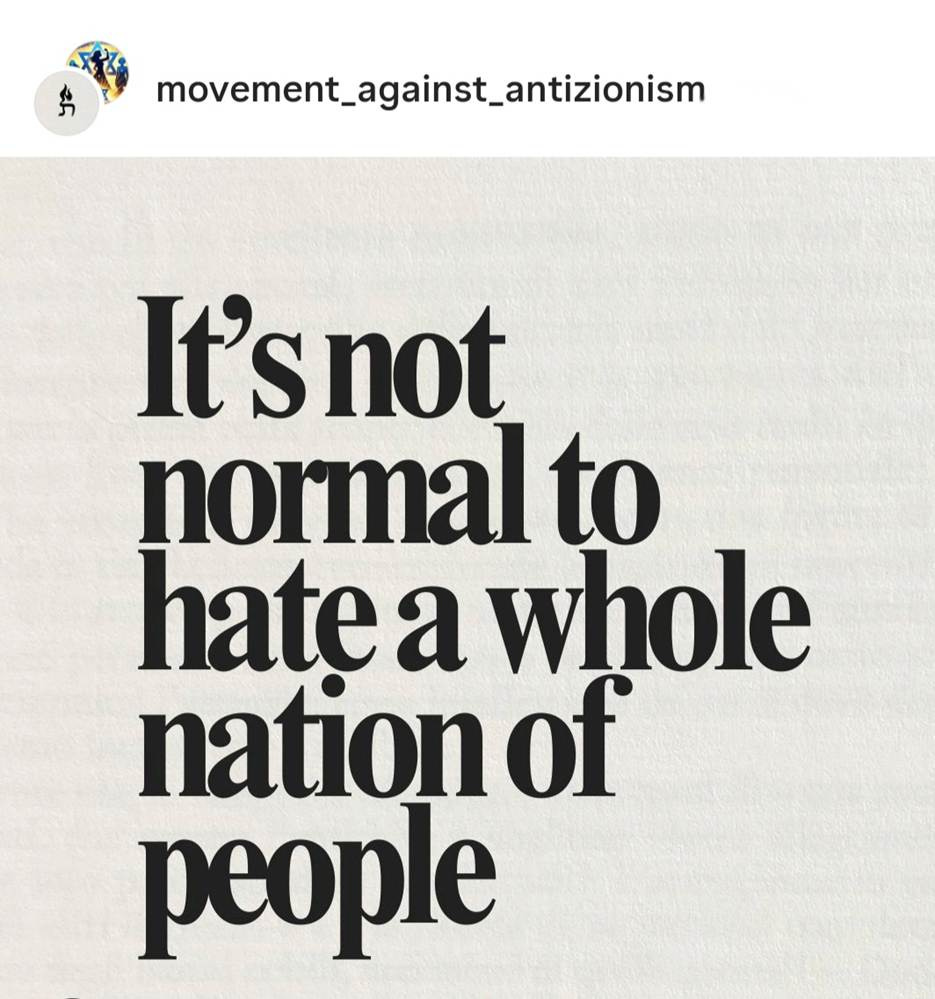
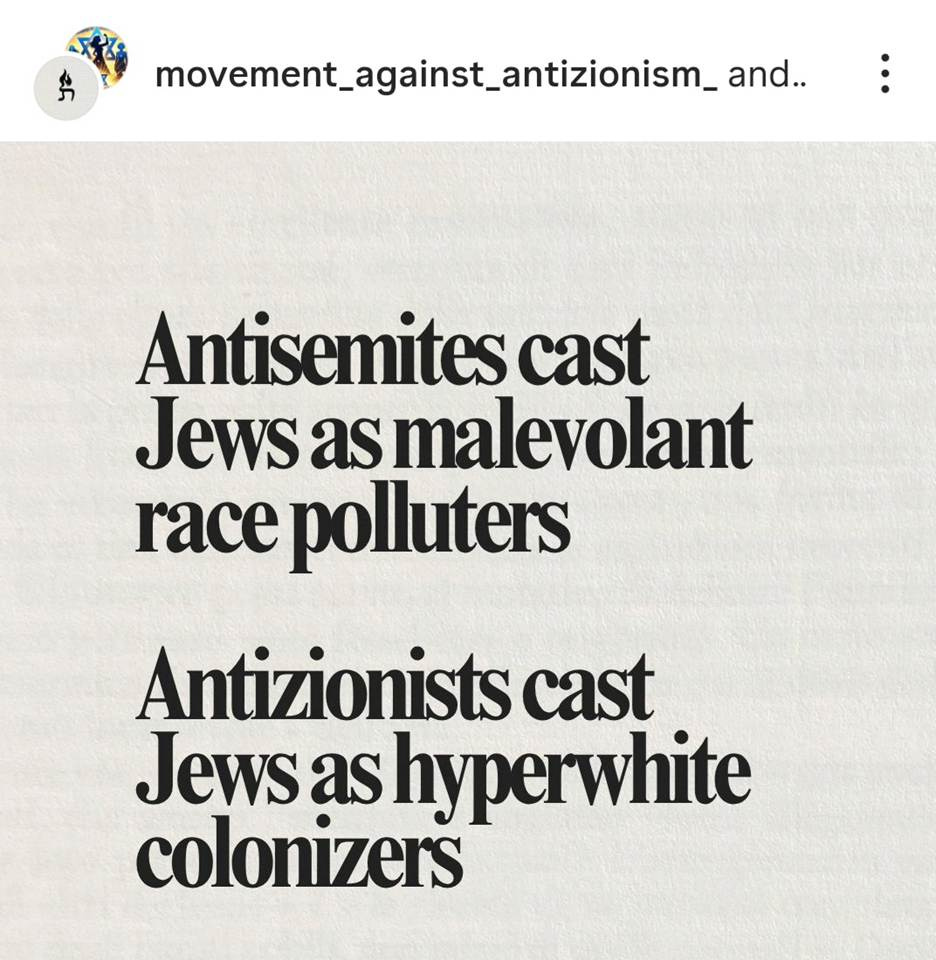
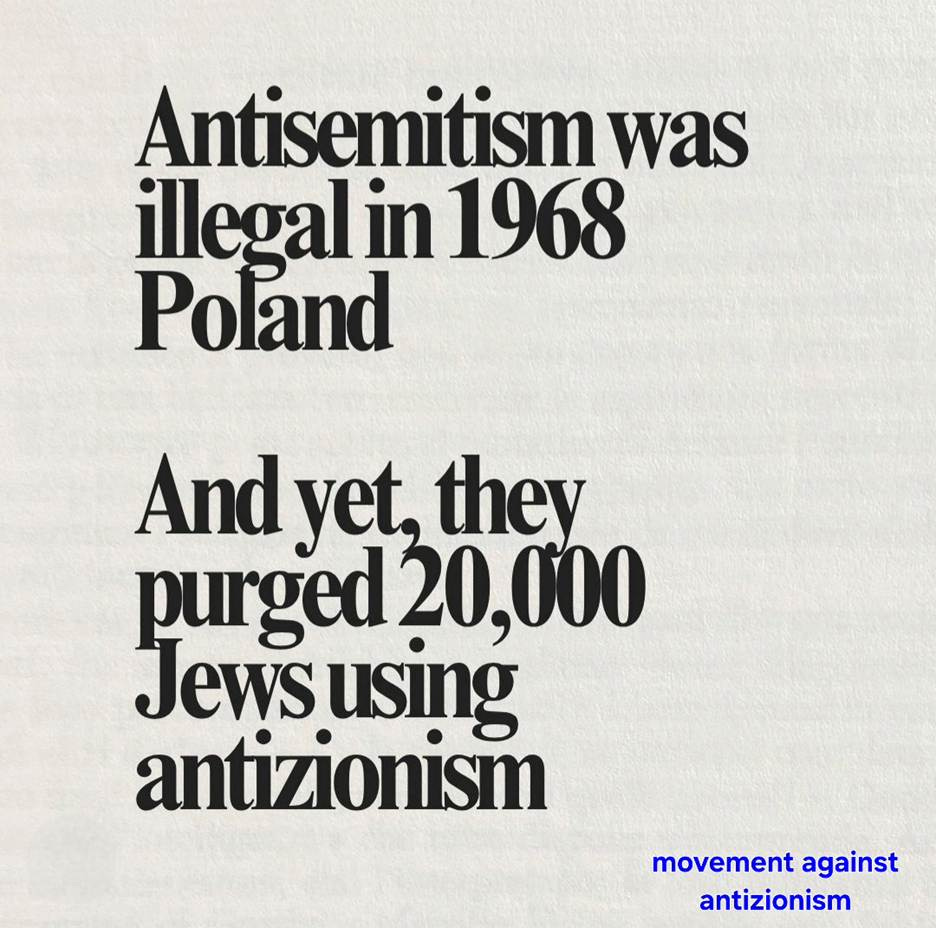
Adam Louis-Klein and MAAZ have ignited the activist conversation that recognizes the Soviet acceleration of antizionism, the ways that confronting antisemitism does not address the current crisis, and opens an avenue for effective actions for the sake of the Jewish community and, as Rabbi Jonathan Sacks reminded us, what starts with the Jews never ends with the Jews. Be courageous, engage MAAZ and join the movement where Indigenous and maroon people can continue their decolonizing struggle for a better world.
As the song Kol Ha’Olam Kulo goes: “The whole entire world is a very narrow bridge and the main thing is to have no fear at all.”